Friday, 6 May 2011

SIRE: Marked For Life


A new campaign from 180 Amsterdam aims to raise awareness about the effects of parents hurtful comments during divorce on children.

The campaign has been created for the Dutch organisation SIRE, a group of advertising and marketing leaders who donate their time to create work that raises awareness of social issues. In Marked For Life, SIRE looks at divorce, and how the unkind words that parents may say in front of children during the stress of a separation can stay with them for life.


The print campaign, which shows children bearing tattoos of the words spoken by their  angry parents, was shot by rising star Laura Pannack, who featured in the CR Jan 11 'new talent' issue. These posters are a translation of the original ads, which are in Dutch (see them here, along with more info on the campaign).


Thursday, 5 May 2011

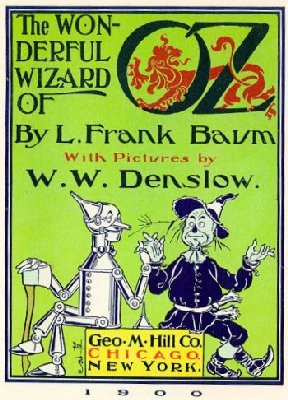
The Wonderful Wizard of Oz: The True Story

Last night I watched a very interesting documentary about L Frank Baum the famous author of The Wonderful Wizard of Oz on BBC 4.


The documentary follows the writing of the iconic American story that was written in 1900 by L Frank Baum, a Chicago businessman, journalist, chicken breeder, actor, boutique owner, Hollywood movie director and lifelong fan of all things innovative and technological. His life spanned an era of remarkable invention and achievement in America and many of these developments helped to fuel this great storyteller's imagination.


His ambition was to create the first genuine American fairytale and the story continues to fascinate, inspire and engage millions of fans of all ages from all over the world. This documentary explored how The Wonderful Wizard of Oz has come to symbolise the American Dream and includes previously unseen footage from the Baum family archives, still photographs and clips from the early Oz films, as well as interviews with family members, literary experts and American historians as it tells the story of one man's life in parallel to the development of modern America.
I highly recommend this documentary and you can view it here on BBC iPlayer

Monday, 2 May 2011

Prince William and Kate Middleton’s Official Royal Wedding Portraits


The portraits were shot by Hugo Burnand, who often photographs the royal family, in the Throne Room of Buckingham Palace just after the ceremony on Friday.


The Best and Worsed Dressed at the Royal Wedding

It was all about the dress, hats, and the uniforms the men were wearing during the royal wedding. Many of the hats were hilarious while some lucky ones got the style right. Some opted for opulence while others stuck to tradition, and some looked as though they either over thought or put no thought into their head gear at all. 

As for hats, Fashionista.com rates who wore them best and the worst. Princess Anne's daughter, Zara Phillips, kicks off the best dressed hat, looking futuristic in a silvery grey side hat. Princess Beatrice and Eugenie wore Gaga-like beige and blue hats. Victoria Beckham wore her Philip Treacy black hat and twig on her forehead. Prince Harry's girlfriend, Chelsea Davy, gets a worse hat nod for her piece of aluminum foil and doily on her head. Royal step-mum, Camilla Parker-Bowles, went classic in an ivory hat. One of the best hat fashions was Princess Marie-Chantal of Greece with a big silvery hat with silver roses on it. Princess Letzia of Spain, kept it sweet and proper with a blush long-sleeved dress and a hat that covered most of her head. Queen Margrethe II of Denmark wore one of the most silly hats, it looked like someone was crocheting on top of her head!
The Good:

Zara Phillips in Phillip Treacy

Princess Marie-Chantal of Greece in Phillip Treacy

Victoria Beckham in Phillip Treacy

Camilla Parker-Bowles

Carole Middleton in Jane Corbett

Queen Sofia and Princess Letizia of Spain

Queen Elizabeth II

Lady Frederick Windsor

The Bad:

Princess Beatrice and Eugenie in Phillip Treacy

Chelsea Davy 

Miriam Gonzalez wide of Nick Clegg

Tara Palmer-Tomkinson in Phillip Treacy

Princess Anne

Queen Margrethe II of Denmark

Friday, 29 April 2011

Royal Wedding Cakes

The big day had two cakes one chosen by Prince William and one chosen by the bride Catherine Middleton. Prince William's choice was made by the biscuit company McVities and Catherine's was made by Fiona Cairns

Prince William's Choice:

Guests at the royal reception indulged in a multi-tiered chocolate biscuit cake at the request of Prince William, who is said to have developed a soft spot for the treat. The newlyweds commissioned biscuit maker McVities to craft the chocolate creation after the Duke of Cambridge enjoyed eating the sweet treat as a child.
Guests were given a taste of nostalgia as the confectionery delight was offered as an alternative to the official wedding cake by Fiona Cairns.
Detailed with white chocolate water lilies, milk chocolate leaves and a mixture of white and milk chocolate feathers, the cake looked fit for the grand occasion. The flowers, which had white Malteser-shaped centres, were placed at the corner of each square and several were arranged aesthetically on top.
A smooth, crisp chocolate exterior encased the unbaked delight which was made from dark chocolate for added flavour, crushed rich tea biscuits and some undisclosed secret ingredients. McVities crafted the cake at one of its UK plants from a recipe received from Buckingham Palace kitchen chefs.
The company, now part of the United Biscuits Group, has made many of the wedding and christening cakes for members of the Royal Family since the marriage of George V to Queen Mary in 1893.
Catherine Middleton's Choice:

a traditional multitiered fruitcake with cream and white piping designed by prestigious British baker Fiona Cairns. Beginning in February, Cairns worked closely with the couple in secret on the concoction.

"Catherine wanted a traditional wedding cake with a modern twist," Cairns said.  To that end, Cairns and her team used "scroll work, lattice work, intricate piping techniques, sugar flowers" to decorate the treat.
"We've used Catherine's list of the 'language of flowers," Cairns added. "The 'language of flowers' is something that was used in Victorian times to express, in a coded way, emotions that couldn't easily or openly be expressed in words but [could be] conveyed in flowers. So all the flowers have meanings."
For example, the bridal rose symbolizes happiness, ivy leaves marriage, and "Sweet William" flowers, which represent gallantry.
Like any engaged couple, William and Kate tested several different flavors.
"We sent over samples of different fruitcake types and they picked their favorites and commented," she said.
Adds an insider, Catherine loved the design. "When Catherine saw the first sketches, she clapped. She is so excited. It's something she has always dreamed of."